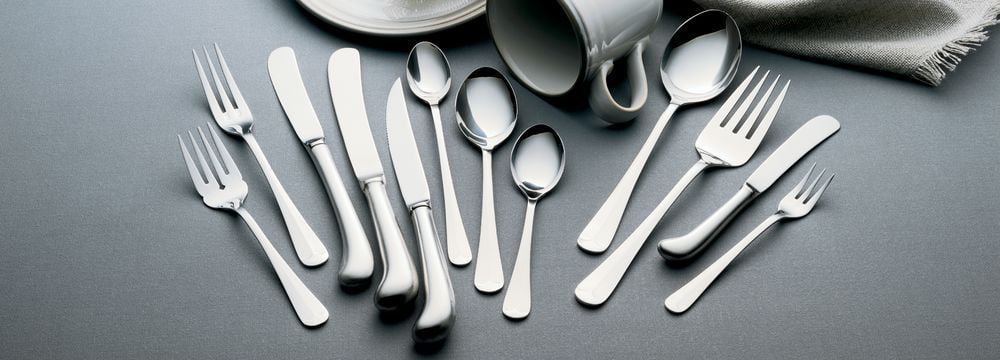
Flatware is one of the first touchpoints guests experience at the table, making it a subtle, but powerful contributor to how a meal is perceived. From weight and balance to shine and durability, the quality of your flatware can reinforce your brand, or detract from it.
While stainless steel flatware is a staple in commercial foodservice, not all flatware is created equally. Material composition and weight play a major role in how flatware performs over time, how it feels in hand, and how well it stands up to daily use and cleaning.
In this guide, we'll break down what to look for in quality flatware, including the differences between stainless steel grades like 18/10, 18/8, and 18/0, how flatware weight impacts durability and guest experience, and how to choose the right option for your type of operation.
Understanding Flatware Composition: Stainless Steel Grades Explained
When evaluating flatware quality, one of the most important factors to consider is its stainless steel composition. Most commercial flatware is made from stainless steel because it offers an ideal balance of strength, corrosion resistance, and ease of maintenance, but not all stainless steel performs the same.
Stainless steel flatware grades are identified by numbers such as 18/10, 18/8, and 18/0, which refer to the percentages of chromium and nickel used in the alloy.
- Chromium increases strength and helps flatware resist rust and corrosion.
- Nickel enhances shine, improves corrosion resistance, and adds flexibility to help prevent bending.
Understanding how these elements work together can help you select flatware that best fits your operation's needs, budget, and service style.
18/10 Stainless Steel Flatware
18/10 flatware contains 18% chromium and 10% nickel, making it the highest-quality stainless steel commonly used in commercial dining.
Thanks to its higher nickel content, 18/10 flatware offers:
- Superior corrosion resistance
- A bright, polished finish that retains its shine over time
- Increased durability and resistance to bending
Best for: Fine dining restaurants, hotels, upscale concepts, and operations where presentation and longevity are top priorities.
18/18 Stainless Steel Flatware
18/8 flatware contains 18% chromium and 8% nickel, offering many of the same benefits as 18/10 at a more accessible price point.
This grade provides:
- Strong corrosion resistance
- Good durability for everyday service
- A polished appearance with slightly less luster than 18/10
Best for: Upscale casual restaurants, polished fast-casual concepts, and operations seeking a balance of quality and value.
18/0 Stainless Steel Flatware
18/0 flatware contains 18% chromium and no nickel, making it a more economical option.
Without nickel, 18/0 flatware:
- Has less shine and flexibility
- Is more susceptible to corrosion over time
- Is magnetic, which can be helpful for operations using magnetic flatware retrievers
Best for: Cafeterias, dining halls, high-volume environments, and operations where flatware loss is a concern and replacement costs matter.
13/0 Stainless Steel Flatware
13/0 stainless steel contains 13% chromium and no nickel and is most commonly used for knife blades rather than full place settings.
This composition:
- Supports sharper cutting edges
- Offers adequate corrosion resistance for knives
- Is not recommended for forks or spoons due to reduced durability
Best for: Dinner and utility knives that require strength and edge retention.
Choosing the Right Grade
Higher stainless steel grades generally offer better shine, flexibility, and corrosion resistance—but they also come at a higher cost. The best flatware choice depends on how your operation balances presentation, durability, replacement frequency, and budget.
Regardless of grade, always confirm that suppliers clearly list the stainless steel composition. Missing or vague material details can be a red flag when evaluating flatware quality.
Flatware Weight: Why It Matters More Than You Think
While stainless steel composition determines how flatware resists corrosion and maintains its finish, flatware weight plays a major role in durability, comfort, and overall guest perception. Weight is determined by the thickness of the metal, not the stainless steel grade—meaning two pieces made from the same material can feel very different in hand.
In commercial foodservice environments, flatware weight impacts:
- How sturdy and balanced utensils feel to guests
- How resistant they are to bending or warping over time
- How often they need to be replaced due to wear
Understanding the different flatware weight categories can help you choose options that align with your service style, traffic volume, and budget.
Forged Flatware
Forged flatware is the thickest and most durable option available. It is crafted from a single piece of stainless steel, with the pattern extending through the entire handle rather than being stamped only on the surface.
Forged flatware offers:
- Exceptional strength and longevity
- A substantial, premium feel
- Increased resistance to bending
Best for: Fine dining restaurants, luxury hotels, and upscale concepts where presentation and durability are equally important.
Extra-Heavy Weight Flatware
Extra-heavy weight flatware is often considered the premium standard in commercial dining. It provides a solid, balanced feel and stands up well to frequent use and washing.
Benefits include:
- Excellent durability
- Minimal bending under pressure
- A high-quality feel that enhances the dining experience
Best for: Fine dining, upscale casual restaurants, and hospitality environments seeking a refined table presentation.
Heavy Weight Flatware
Heavy weight flatware offers a strong balance between durability and cost. It feels noticeably sturdier than medium weight flatware while remaining more budget-friendly than extra-heavy options.
Heavy weight flatware:
- Resists bending better than economy options
- Maintains a clean, professional appearance
- Works well for a wide range of dining environments
Best for: Fast-casual restaurants, cafés, bistros, and mid-level dining concepts.
Medium Weight (Economy) Flatware
Medium weight flatware, sometimes referred to as economy weight, is the lightest option typically used in commercial settings.
This flatware:
- Is the most affordable option
- May bend more easily over time
- Is easy and inexpensive to replace
Best for: Cafeterias, schools, healthcare facilities, and high-volume operations where cost control and replacement flexibility are priorities.
Choosing the Right Weight
Heavier flatware often delivers a more premium feel, but it isn’t always the right choice for every operation. The ideal flatware weight depends on your guest expectations, volume of use, risk of loss, and long-term replacement costs.
By pairing the right weight with the appropriate stainless steel grade, operators can strike the right balance between durability, presentation, and budget.
Matching Flatware to Your Operation
Choosing the right flatware comes down to how your operation balances presentation, durability, and replacement frequency. While higher-grade materials and heavier weights offer a more premium feel, they aren’t always necessary for every environment.
Here’s a quick guide to help match flatware to common foodservice settings:
- Fine Dining & Hotels:
18/10 stainless steel with extra-heavy or forged weight for a polished, long-lasting presentation. - Upscale Casual Restaurants:
18/8 stainless steel with heavy or extra-heavy weight for durability without the premium price point. - Fast Casual & Cafés:
18/0 or 18/8 stainless steel with heavy weight to balance cost, performance, and appearance. - Cafeterias, Schools & Institutions:
18/0 stainless steel with medium weight for easy replacement and cost efficiency. - Catering & Banquets:
Durable, heavier flatware that holds up to transport and frequent washing while maintaining a professional look.
Some Featured Flatware Brands We Carry
Sam Tell works with a wide range of trusted flatware manufacturers known for their durability, design, and performance in commercial foodservice environments. While our shop site highlights a curated selection of flatware brands, we also offer access to additional lines and solutions beyond what’s listed online.
Some of the flatware brands currently featured on our shop site include:
- 1880 Hospitality – Modern, design-forward flatware with a premium feel, ideal for contemporary and upscale concepts.
- Libbey – A trusted name in tabletop, offering durable flatware options that balance style and everyday performance.
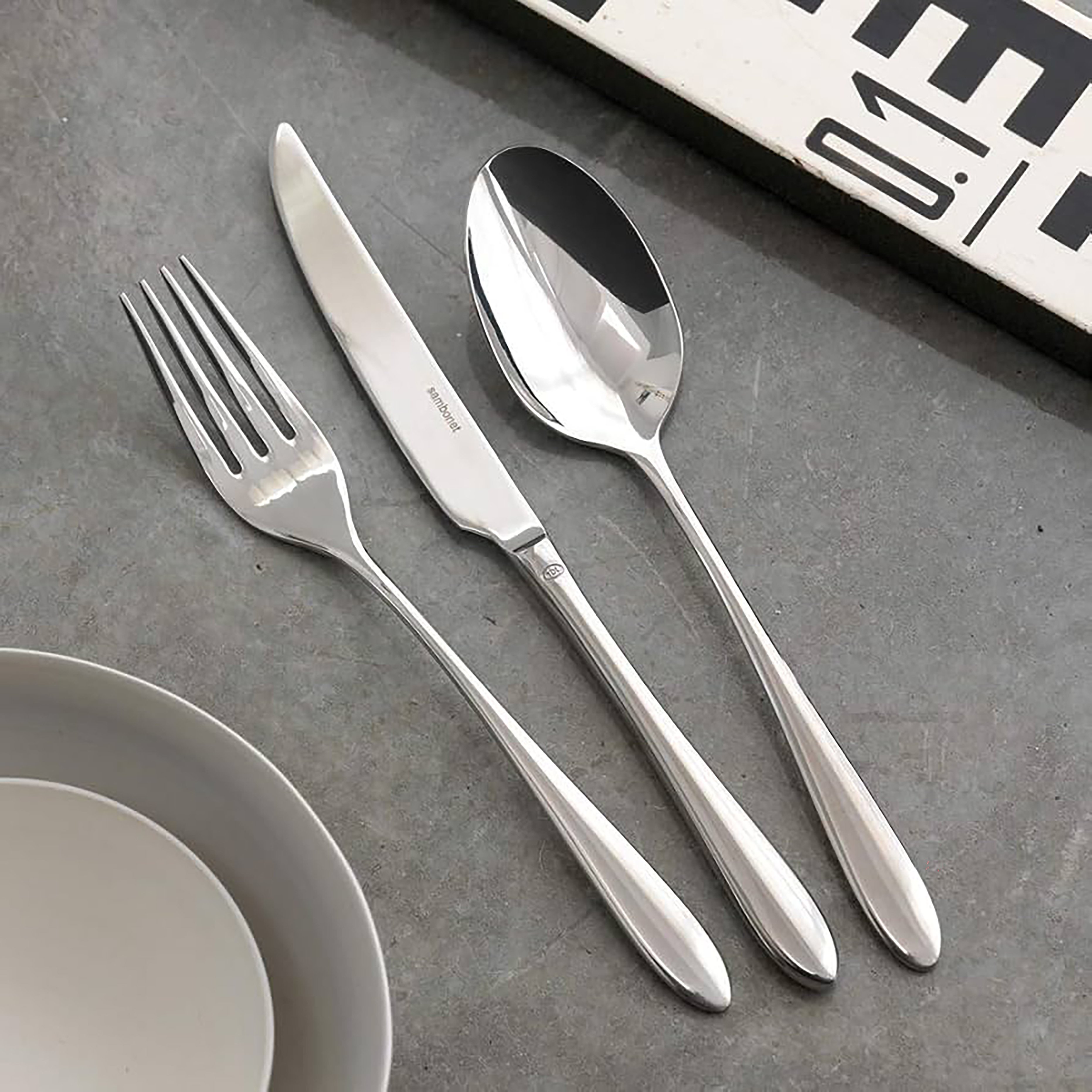
- Sambonet – Known for sleek European design and high-quality stainless steel for refined table settings.
- Stanton Trading – Reliable, cost-effective flatware solutions built for commercial use.
- Steelite – Premium tabletop collections designed to pair seamlessly with professional dinnerware programs.
- Vollrath – Performance-driven flatware engineered for durability in demanding environments.
- Walco – A wide range of patterns, materials, and weights to suit everything from casual to fine dining.
Flatware Style & Design Considerations
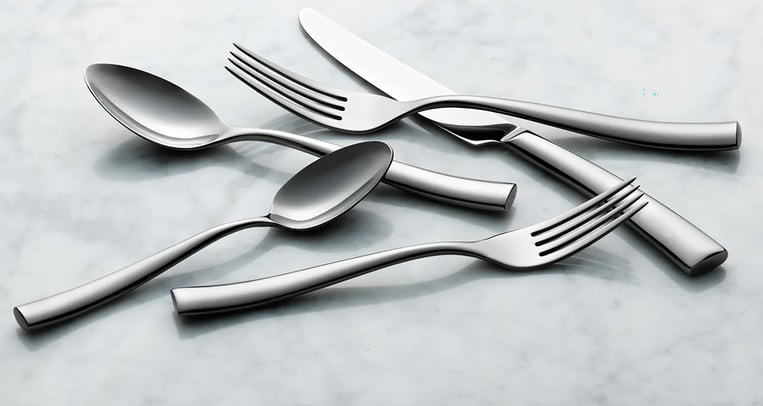
Beyond material and weight, flatware style plays a role in reinforcing the overall look and feel of your tabletop. Handle shape, finish, and pattern should complement your dinnerware, glassware, and concept, whether that’s classic and traditional or clean and modern.
Choosing a cohesive flatware style helps create a polished table presentation without distracting from the food or guest experience.
How Sam Tell Can Help
Selecting flatware is about more than choosing a pattern, it’s about finding the right balance of quality, durability, and cost for your operation. Sam Tell works with a wide range of trusted manufacturers to help operators compare stainless steel grades, weights, and styles that align with their needs.
Our team can guide you through available options and connect you with flatware solutions designed to perform in real-world foodservice environments.